Ants on the windowsill: what the trail is telling you
Ants rarely wander. A trail has a start and an end, and both ends tell you something about your house.
October 20, 2026 · 3 min read
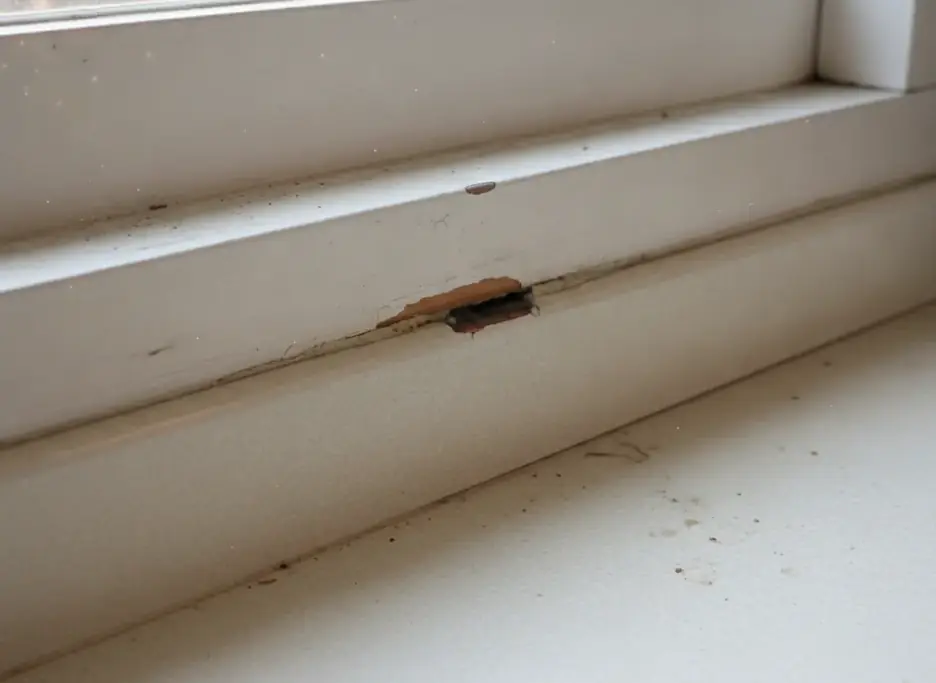
You wipe the kitchen windowsill in the morning, and by afternoon a thin line of ants is back, marching from one corner of the frame to the sink. The instinct is to spray the line and move on. A better first move is to stand there for two minutes and watch.
A trail has two ends
Ants lay down a scent path so the rest of the colony can follow. That path connects a nest to something they want: food, water, or both. Which direction are they heading, and which way are the ants carrying something? Ants walking toward the sink are usually heading for moisture or crumbs. Ants walking away, often with a bit of food, are heading home.
Follow the trail backward as far as you can. If it disappears into a crack in the caulk, a gap beside the window trim, or a hole in the sill, you have found the way in. If it comes from outside across the siding and ends at a window with a worn seal, that is useful information too.
Three ants you are likely to meet
Not every ant in a New England house means the same thing. A few quick ways to sort them:
- Carpenter ants: large, often black or black and red, about a half inch long or bigger. They nest in damp or damaged wood and are most often seen at night. Fine sawdust, sometimes mixed with insect bits, in a small pile below a wall or beam is a warning sign.
- Pavement ants: small and dark brown, often seen coming up through cracks in a slab, cellar floor, or the edge of a patio. Tiny mounds of dirt beside the crack are typical.
- Odorous house ants: small, brown to black, and fond of sweets. Crush one and you may smell something like rotten coconut. They tend to show up indoors after heavy rain or when the weather turns cold.
A single big ant wandering across the floor in late winter deserves more attention than a trail of tiny ones in July. A large ant indoors when it is cold outside can mean a nest inside the house, in a wall or beam that has stayed warm.
Why moisture keeps coming up
Carpenter ants do not eat wood the way termites do. They hollow it out to make a nest, and they strongly prefer wood that has been softened by moisture. A leaking window flashing, a roof valley that sheds water behind the siding, or a bathroom fan venting into an attic can create the damp, soft spot they like. If you find ants repeatedly near a window or bath, a hidden leak is a fair thing to suspect.
That is also why the windowsill is such a common stage for this. Old caulk shrinks and cracks. The gap between the sash and the frame becomes a doorway, and the condensation that forms on a cold morning supplies a drink.
What helps, and what makes it worse
Wiping the trail with soapy water or a vinegar and water mix removes the scent path and confuses the workers for a while. Clearing crumbs, wiping sticky jar rims, and rinsing pet bowls take away the reward. Re-caulk the cracks you found and keep shrubs and vines trimmed back from the siding, since plants touching the house give ants a bridge.
What tends to make things worse is spraying the visible ants with a store-bought repellent. You kill the few you can see, the colony goes on, and some species respond to the disturbance by splitting into several smaller colonies. The line goes away for a week and comes back from two directions.
What to note for an inspection
- The size and color of the ants, ideally with a close photo and a coin beside them
- Where the trail starts and ends, and the time of day you see it
- Any sawdust-like debris or a faint rustling sound inside a wall
- Recent leaks, roof work, or window repairs in that part of the house
- Whether you see winged ants indoors, and the month when it happened
Ask someone to take a look
Ants are on Integrity Pest Control's list of pests in Johnston and the surrounding areas. If the trail keeps returning, or you suspect carpenter ants, call the family at (401) 467-3344. Tell them what you saw on the sill and where the trail went, and you will have a head start on the diagnosis.
Integrity Pest Control, (401) 467-3344
Call (401) 467-3344More articles
Mud tubes on the cellar wall: reading termite signs in a Rhode Island house
A pencil-wide line of dried soil on the foundation is easy to miss and worth a second look.
Why mice come in every October, and the gaps they use
The first hard cold snap sends field mice looking for a warm cellar, and they are good at finding the way in.