Cellar and sill plate
Termites start in the cellar and work up the wall
Mud tubes on a fieldstone or poured foundation are the thing to look for, and the sooner someone looks, the better.
Mud tubes on the sill
Subterranean termites live in the soil and need moisture, so they build thin earthen tubes to cross anything dry between the ground and the wood. In a Johnston house that usually means a line of dried mud, about the width of a pencil, running up a poured foundation or a fieldstone wall to the sill plate, the timber that sits on top of the foundation and carries the house.
Take a flashlight down the bulkhead stairs and look along the top of the foundation wall, behind the furnace, and around any pipe or post that touches the floor. Scratch a tube open with a screwdriver. A dry, empty tube may be old. A tube with fresh mud or tiny pale insects inside deserves a phone call. Wood that sounds hollow when you tap it, or a sill plate that gives under the tip of a screwdriver, is the other thing worth reporting.
A scatter of small clear wings on a cellar windowsill after a warm spring day is another sign. If you see any of this, call (401) 467-3344 and describe it, and the family sets up an inspection.
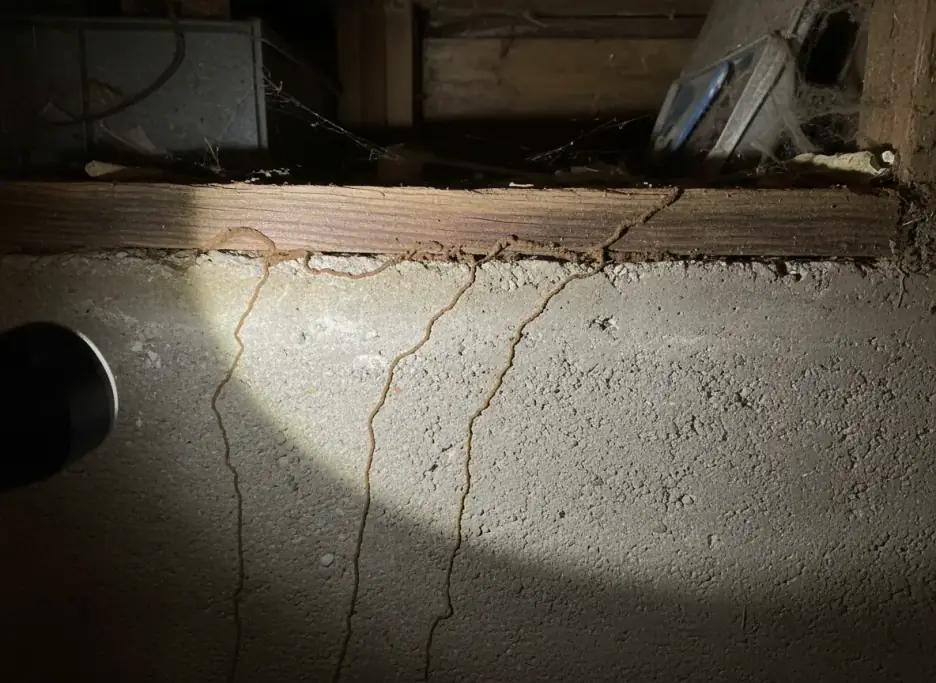
Earthen mud tubes running up a cellar foundation to the wooden sill plate
Why the cellar is where it starts
Termites come up from the soil, and in a New England house the cellar is the part of the building closest to the soil. Fieldstone foundations are full of joints and mortar cracks wide enough for a tube to hide in, and poured foundations crack at the corners and where the slab meets the wall. Rhode Island frost works those cracks open a little more every winter.
Wood that sits low is what they are after. Sill plates, floor joists that end in the stone, a wooden bulkhead frame, an old porch post set in the ground, firewood stacked against the clapboard. Damp makes it worse. A leaking hose bib, a downspout that dumps beside the foundation, or mulch piled up past the sill gives them moisture and a hidden path in.
That's why an inspection starts at the bottom of the house and not in the room where you first noticed something. The damage is usually below the part you can see.
What to watch after
Once someone has looked at the cellar, the job for the homeowner is to keep watching. Check the same spots each spring and again in the fall: the top of the foundation, the bulkhead frame, the base of every post. Pencil the date on a joist so you remember when you last looked.
Keep the soil and the wood apart. Pull mulch back from the clapboard and the sill, keep firewood off the ground and away from the house, and point downspouts away from the foundation. Fix drips quickly. A cellar that stays dry gives termites less reason to stay.
Don't knock down an old tube and forget about it. Note where it was and tell whoever inspects the house. If something new shows up in the same place, that is useful information. Questions about what you found in your Johnston cellar are what the phone at (401) 467-3344 is for.
Family owned and run in Johnston for over 30 years. Call (401) 467-3344.
Other things that turn up around the sill
Pests rarely come one at a time. See everything the family handles on the pests we treat page, or send a message describing what you found.