Bulkhead door and garage seal
A mouse needs a gap no wider than a dime
Chewed weatherstripping, a gap around a pipe, a bulkhead door that has dropped on its hinges: the first cold nights of a Rhode Island autumn find every one of them.
The dime-sized gap
A house mouse can squeeze through a hole about the width of a dime, and only its skull has to fit. A rat needs roughly a quarter. That is why the entry points are rarely the ones people expect. Nobody leaves a door open for a mouse. They use the worn corner of a garage door seal, the gap where a cable or gas line enters the clapboard, the space under a bulkhead door that has sagged, or a crack along the top of the fieldstone foundation.
Walk the outside of the house slowly and look at every place something passes through the wall: the dryer vent, the oil fill, the hose bib, the air conditioner line set. Then follow the ground line where the sill plate meets the foundation. Dark smudges around a gap are oil from fur. Fresh gnaw marks are pale, and old ones turn grey.
Droppings along the baseboard in the pantry, behind the stove, or in the corner of the garage show where they travel, because mice run along walls. If you have found some, call (401) 467-3344 in Johnston and tell the family where.
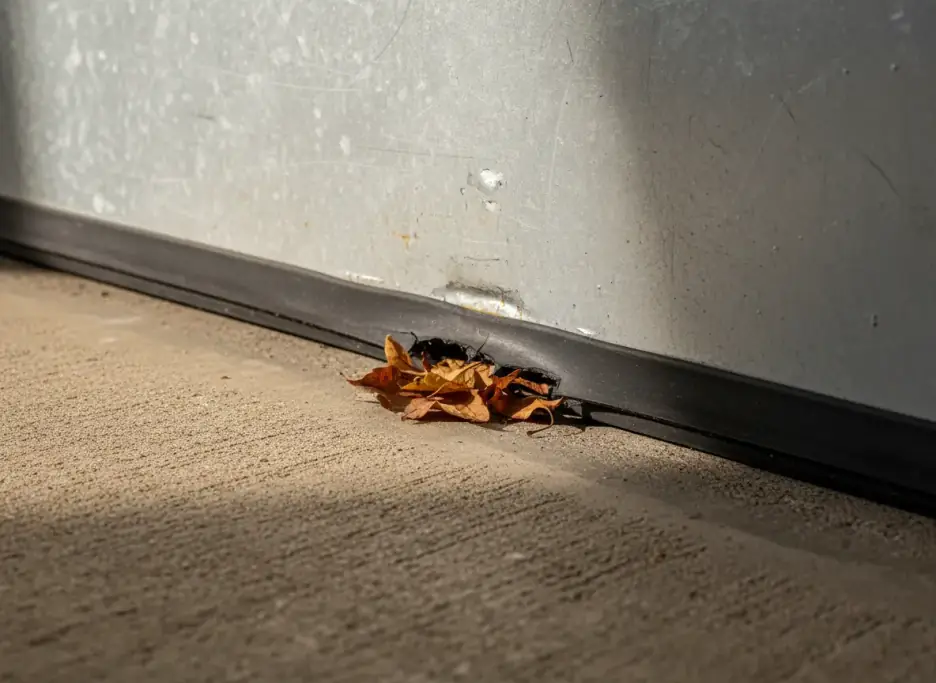
Chewed gap in a garage door weatherseal with dry leaves blown in
Why autumn brings them in
Mice don't move in during October to be difficult. They come because the field and the stone wall out back stop feeding them. When the first hard frost kills off the seeds and insects, a warm house with a full pantry is the best offer around. Leaf litter and brush against the foundation hide the approach.
Cold snaps in Rhode Island arrive fast. A house can go from open windows to the heat running inside a week, and the warm air leaking out of a drafty cellar or attic draws mice toward the same gaps that leak your heating dollars. The ones that get in settle into wall cavities, attic insulation, and crawl spaces, and they begin nesting.
Rats come for different things: garbage, spilled bird seed, a compost pile, a broken drain line. A rat in the cellar usually means something outside is feeding it, and a proper look at the property should include finding that.
Sealing versus trapping
Trapping deals with the animals that are already inside. Sealing keeps the next ones out. A house needs both, and the order matters. Seal first and you can lock a mouse inside the wall. Trap only and new mice walk in through the same gap a month later.
Good sealing is dull work with hard materials: steel wool or copper mesh packed into a gap and held with caulk, metal flashing across a rotted corner, a new sweep on the garage door and the bulkhead. Mice chew through plain foam and caulk on their own, which is why the metal goes in first.
Whoever does the work should look at the whole house and not just the room where the noise is. To start, call (401) 467-3344, describe what you are hearing and where, and the family sets up an inspection.
Family owned and run in Johnston for over 30 years. Call (401) 467-3344.
Other guests that come in with the cold
One gap often serves several pests. Browse everything the family handles on the pests we treat page, or send a message with what you have noticed.